40 bad fats on food labels
food labels | Fat Loss Unscrambled The food labels will tell you the total fat, then the 'saturated' fat and the 'unsaturated' fat. S aturated fat is the bad fat, and should be kept to a minimum. Unsaturated fat, sometimes is broken down into 'poly-unsaturated fat' 'mono-unsaturated fat' is the good fat that will aid your body's metabolism. hgic.clemson.edu › factsheet › food-labels-fatFood Labels: Fat & Cholesterol | Home & Garden Information Center Eating too much total fat, saturated fat, trans fat or cholesterol may increase your risk of certain chronic diseases, like heart disease, high blood pressure and some cancers. Facts on Food Labels Food labels contain clues to a food’s fat and cholesterol content, including the amount per serving.
What Foods Are High in Fat? High-Fat Foods to Avoid Read labels when buying packaged products, and choose foods that are "trans fat-free." Avoid buying foods with labels that mention partially hydrogenated vegetable oils, as these may contain some trans fats. ... These foods are rich in bad fats, namely, saturated and trans fats and should be avoided: Deep-fried foods (French fries, fritters ...

Bad fats on food labels
PDF How Do I Understand the "Nutrition Facts" Label? • Total Fat — is the amount of fat found in one serving of the food. Total fat includes the amount of "bad fats" (saturated and trans) and "good fats" (monounsaturated and polyunsaturated). Fat is higher in calories than protein or carbohydrates. So, cutting back on your fat intake will help you reduce the number of calories you eat. Good fats and bad fats - Saga If a food product has these words on the label it must contain 25% less fat than a similar standard product. This can still mean a lot of fat! Read the label carefully to see how much fat there is in 100g of the food. Less than 5% fat - or 95% fat free This means that the food has less than 5g of fat per 100g. Top 5 Sources of Bad Fats - Straight Health 4. Partially hydrogenated Oils. Partially hydrogenated oils add trans fats (worst type). Sources include most junk foods, non-natural peanut butter, fast food, vegetable shortening and margarine. To avoid trans fat, check the nutrition label and make sure the food is not made with partially hydrogenated oil. 5.
Bad fats on food labels. Good Fats, Bad Fats :: Diabetes Education Online "Bad" fats increase your risk for coronary heart disease, and need to be limited in your diet: Saturated fats Hydrogenated fats Trans fats Saturated fats, which usually come from animal sources, are naturally solid at room temperature. Examples are lard, butter, milk fat, meat, chicken and pork skin, ice cream and cheese. Which Fats Are Good & Bad for Your Health? - eMediHealth Unsaturated fats are loosely packed fatty acids that bend and move, which is why this fat is commonly liquid at room temperature. Oils are the most recognizable form of unsaturated fat, including olive, canola, or vegetable oil. It is recommended to choose oils over solid fats for a healthy lifestyle. 2. Saturated fat The Bad Effects Of Eating Junk Food | How To Change Your Diet For example, salad, sushi and sandwiches are healthy forms of fast food. However, most fast food restaurants, such as McDonalds or KFC serve unhealthy junk food. In Australia, 35% of an average adult’s daily energy intake and 41% of children’s daily … Looking For The Hidden Fats In Foods - How To Get Flat Abs Fast Cheese: Cheese is without a doubt one of the most tempting foods products available. However, know that 100 grams of cheese contains 30 grams of fat! Instant noodles: Many people adore instant noodles because they're a budget-friendly meal that you can easily prepare. However, know that a cup of instant noodles can contain more saturated fat ...
How to Read Food Labels + Nutrition Facts • Healthy.Happy.Smart. This implies that your food might contain trans-fat regardless of the possibility that the nutrition facts label says 0g. Always ensure to peruse the ingredient list for trans-fat items. This includes baked goods, hydrogenated vegetable oil, fried foods, margarine, and snack foods. cyberparent.com › nutrition › fat-food-labelsFat Content on Food Labels – Reading Between the Lines Mar 24, 2019 · When it comes to listing fat on food labels, manufacturers are required to only list total fat and saturated fat. Some also voluntarily list monounsaturated and polyunsaturated fat, but it’s unlikely you’ll see trans fat listed.” The Mayo Foundation continued, “Still, you may be able to tell if a product contains trans fat, even if it’s not directly listed on the food label. Look for the words ‘hydrogenated‘ or ‘partially hydrogenated’ in the list of ingredients. These ... Easy Guide to Understanding Food Labels When You Have High ... - MyDoc 1. Choose products low in saturated fat, trans fat and cholesterol. When shopping for food, use the nutrition information panel to compare and choose products with lower fat, saturated fat and cholesterol content. Saturated fat is a type of fat that raises your total and LDL cholesterol and risk of heart disease, so intake should be limited. Food Label Ingredients: How to Look for MSG, Trans Fat, and more The American Heart Association recommends choosing vegetable oils and margarines with liquid vegetable oil as the first ingredient and no more than 2 grams of saturated fat per tablespoon, such as...
Trans fat - Wikipedia Trans fat, also called trans-unsaturated fatty acids, or trans fatty acids, is a type of unsaturated fat that naturally occurs in small amounts in meat and milk fat. It became widely produced as an unintentional byproduct in the industrial processing of vegetable and fish oils in the early 20th century for use in margarine and later also in snack food, packaged baked goods, and for … Facts about saturated fats: MedlinePlus Medical Encyclopedia Reading food labels can help you keep track of how much saturated fat you eat. Check the total fat in 1 serving. Also, check the amount of saturated fat in a serving. Then add up how many servings you eat. As a guide, when comparing or reading labels: 5% of daily value from fats and cholesterol is low; 20% of daily value from fats is high How To Read Food and Beverage Labels | National Institute on Aging At the top of the Nutrition Facts label, you will find the total number of servings in the container and the food or beverage's serving size. The serving size on the label is based on the amount of food that people may typically eat at one time and is not a recommendation of how much to eat. Read more about serving and portion sizes. Dietary Fats - American Heart Association Nov 01, 2021 · There are four major dietary fats in food: Saturated fats; Trans fats; Monounsaturated fats; Polyunsaturated fats; The four types have different chemical structures and physical properties. The “bad fats,” saturated and trans fats, tend to be more solid at room temperature (like butter). Monounsaturated and polyunsaturated fats tend to be ...
Keto vs Paleo - What is Keto Diet | Keto Conduct
Food Labels: 5 Harmful Ingredients To Avoid | ThePostGame.com Here are some of the worst ingredients that are added to many foods that you should look out for and avoid: Partially Hydrogenated Oil. Partially hydrogenated oil is another name for a trans fat ...
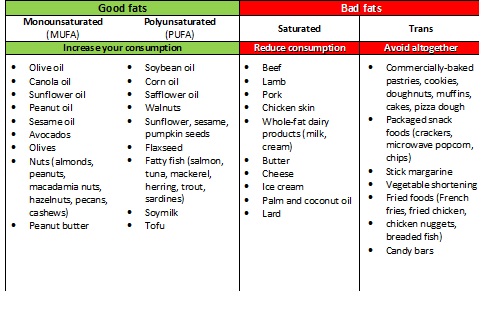
Good and Bad Fats/Oils – My Fridge
brokensecrets.com › 2010/03/15 › bad-fats-can-beBad Fats Can be Hidden on Nutrition Labels | Broken Secrets Mar 15, 2010 · This label is from Fiber One cereal. The total fat is 1.5 grams per serving, but if you add all of the itemized items you only get 0.5 grams. That means, 1 gram of fat is hidden. If it was all monounsaturated it wouldn’t be so bad, but it can’t be more than .49 grams of good fat or it would have to be listed.

Day 16 of 21 junk food free challenge
Good Fats vs Bad Fats - Handy Guide • Healthy.Happy.Smart. See below for a handy list of bad fats to skip or read labels on: shortening Margarine French fries fried chicken fingers fried fish fried vegetables basically anything fried, deep fried or battered pie crust or store bought pie boxed pancake or waffle mix boxed cake mixes and pre-packaged cake frostings cookies and cakes ice cream

Good Fats vs Bad Fats • Don't be afraid of Fat! • Healthy.Happy.Smart.
How to Read Nutrition Facts Labels the Right Way - GoodRx Bad fats Saturated and trans fats are the less healthy types of fats. Consuming them may have many negative health impacts, including higher levels of inflammation in the body and an increased risk of developing heart disease. Saturated fats Saturated fats are solid at room temperature and come from foods like butter and shortening.

Avoid causes of dementia - starting today!
Top 10 High Fat Foods to Avoid - myfooddata Read ingredient labels and avoid any trans or partially hydrogenated fats or oils. High-fat foods to avoid include fast foods, whipped cream, fatty meats, fried foods, fatty snacks, processed meats, desserts, fatty salad dressings, animal fats, and trans-fats. ( 1) The daily value (DV) for fat is 78 grams per day. ( 2)

Healthy Food Choices - Natpe Market - Be Nutrition Wealthy
Understanding Ingredients on Food Labels - American Heart Association Food labels are an important source of information about calories and the nutritional value of the foods you eat, a crucial tool in building a heart-healthy diet. ... These fats raise your bad cholesterol (LDL) and decrease your good cholesterol (HDL). Some experts say you should choose foods with five or fewer ingredients. While this “five ...

Alcohol Nutrition Labels Needed: They Should List More than Calories
Dietary Fats: What's Good and What's Bad - familydoctor.org All food companies have to list trans fats on nutrition fact labels. However, foods can have up to .5 grams of trans fat per serving and still show 0 grams. Check the ingredients list and look for the words "hydrogenated oil." You should limit saturated fats and avoid trans fats. They often are found in fast food, fried foods, and snack foods.

Nutrition Labels - Beautiful to the Core
On some food labels, there is also just an indication of how much fat is contained in a product but there is no differentiation between good and bad fats. Even though all kinds of fats contain a similar amount of calories, there are still huge differences regarding their health effects.
Post a Comment for "40 bad fats on food labels"